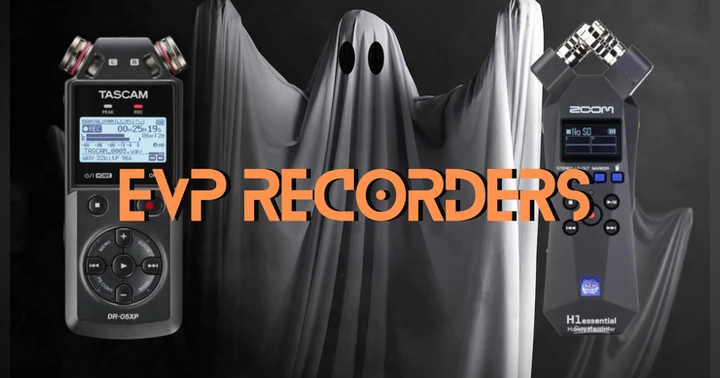
Panasonic RR-DR60: Is It Really the Best EVP Recorder
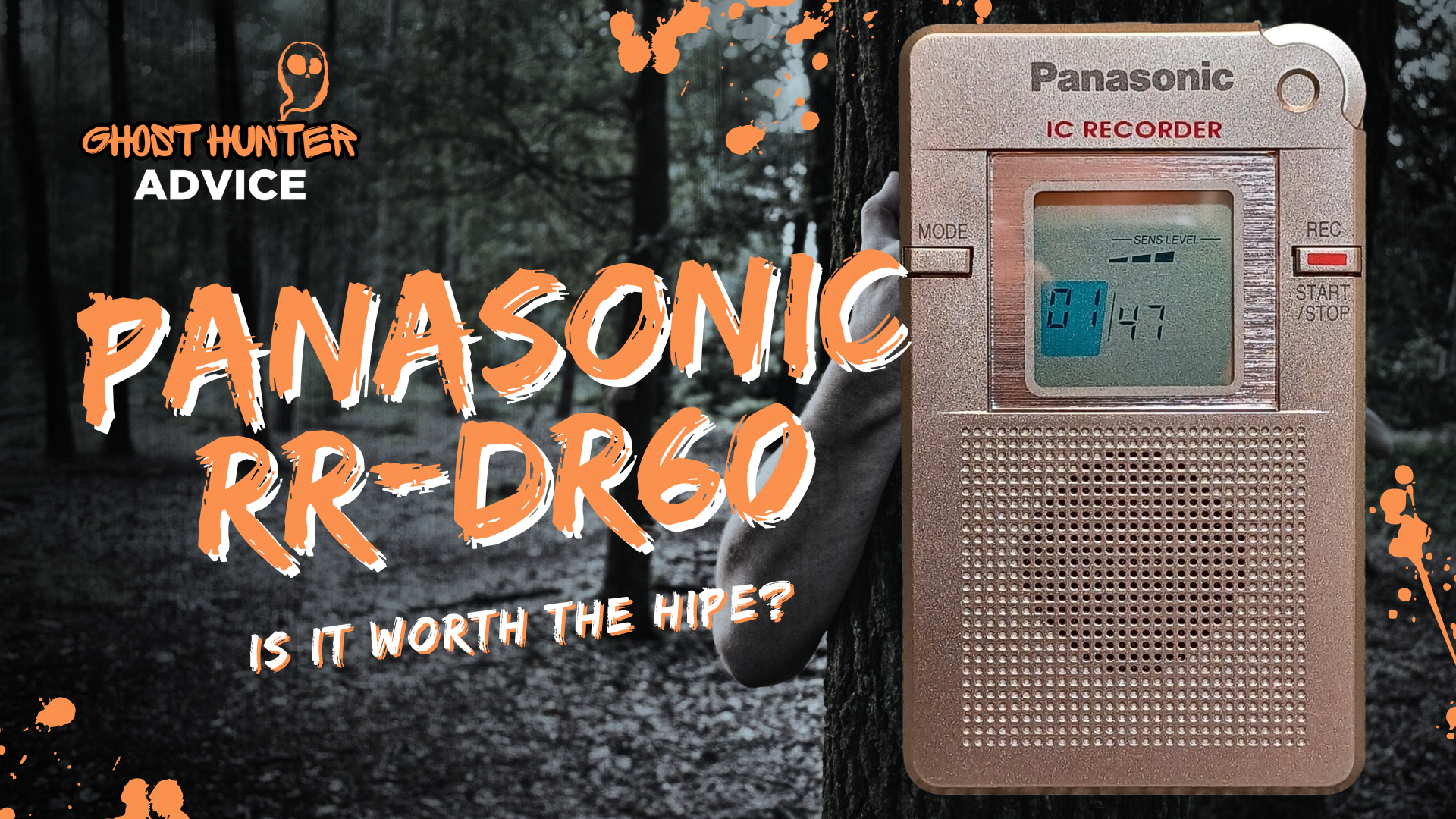
Panasonic RR-DR60 was one of the first consumer digital recorders to hit the market. In 1998, it retailed for around $100, and some believed to had an uncanny ability to capture voices from beyond the vail. The RR-DR60 quickly became the must-have piece of ghost hunting equipment of the late nineties.
Today, thanks to paranormal celebrities, the RR-DR60 goes for thousands of dollars if you find it on eBay, and still holds its must-have status… in certain circles.
Why is it so popular?
Some ghost hunters believe it is the number one recording device for capturing EVPs. In truth, there are more recorded abnormalities on the RR-DR60 than other devices. Some demonic sounding growls sound as though they might be in response to questions, and others appear to be spirits talking in the background when the person doing the recording was absolutely alone.
But… are these sounds actually EVPs?
No. There, you can stop reading.
Just kidding. There are not many cut and dry findings in this field, so it’s exciting when one pops up, even when it’s negative.
When the Panasonic RR-DR60 hit the consumer market, it was meant to be a note taking device, not a high-fidelity recorder like the new Zoom H1 or H4. So the tech is a little wampy.
The pocket recorder sported a proprietary ultra-low bit rate compression algorithm, allowing the device to store quite a bit of audio on internal memory. Again, it was a low-fidelity recorder only meant for not taking.
Because of the low fidelity recordings, the device generated a lot of background noise and low-quality recordings. Throw in the 90s ghost hunting boom and America’s newfound fascination with all things spooky, and you have a recipe for a modern urban legend.
The issues with this device start with the sample rate. To save space, the device has a sample rate of about 6kHz. For reference, the podcast is recorded and mastered at 44.1 kHz. My audiobooks and voiceover projects for video are recorded at 48kHz.
The sample rate is how many times a sound is sampled per second. So the podcast is sampled 44,100 times per second. Creating a smooth real to life sound. 44.1 kHz is CD-quality audio.
So, the RR-DR60 only samples around 6000 times a second. While it keeps the file size small enough for 1990s technology to get the gist of what’s being said, it misses a wide range of audible frequencies.
Humans can hear a frequency range of about 20Hz to 20,000Hz, which shrinks a bit as you age. In order to record sound, the sample rate must be at least equal to twice the frequency of the sound. 44.1kHz (44,100Hz) is more than enough to capture the full human audible range, but 6kHz (6000Hz) can only capture up to 3000Hz. Leaving a lot out.
Aliasing is a phenomenon that happens when an ultrasonic sound, sounds above the human audible range like one occurring at 30kHz, makes it past a digital recorder’s built-in aliasing filter and is folded back into the audible range. It shows up on recorders as a metallic, unnatural sound. As stated earlier, a recorder can only record at half its sample rate.
An argument made for the DR60 is that it is picking up sounds outside the audible range and folding them back, causing the growls and voice-like sounds heard on the recorders. Meaning that the alledged EVPs were infact physical legitimate recordings
A particle physicist named Dr. John P. Castella became interested in the RR-DR60 after participating in a ghost tour that used the device. He began testing it. I’ll link to his study below.
One hypothesis held by Dr. Castella was that an issue with the recorder’s software was causing the sounds. The RR-DR60 did not actually save the sounds it’s microphone was picking up.
Along with the low bitrate, the recorder had a bank of waveforms. When the microphone heard a sound, it was matched to the closest waveform in its memory bank. The waveform of the sound was then changed to match the storable one before being put into the device’s memory. The recorder also stored 1-second intervals even when there was no sound. As it was storing information, the compression process added artifacts and changed the sound of the original recording.
To test this, two RR-DR60s were placed together and recorded the same noises. Their recordings came out completely differently. The experiment showed that the sounds were being generated by the recorder’s faulty software, and not physical sounds being picked up by the recorders.
In 1999, the RR-DR60 was taken off the shelves and replaced by the Panasonic RR-QR80. The urban legend was that Panasonic knew the recorder was making contact with the other side, and was recording phantom voices from beyond the grave. The truth was that they had experimented with making a pocket digital recorder, made a crappy product, and replaced it with an upgrade.
My Advice
Don’t spend $1000 plus on a broken recorder when you can get a high-end Zoom H1E for $108.
Resourses
Kenny Biddle Center For Inquiry Video - https://youtu.be/nqxlvUoEgP4?is=AxOEZB_MhF--eM_W
Dr. John P. Costella Study - https://johncostella.com/ghosts/

Host/Producer
Tanner is a licensed private investigator and has been investigating the paranormal since 2001. He has investigated hauntings, possessions, and strange activity throughout the southeastern United States. He started GHA to give ghost hunters and enthusiasts a place to find real information and stories from the field.

Help! My House Is Haunted: Becoming Your Own Ghost Hunter